New START Treaty Expires: A Defining Moment for the World’s Nuclear Future

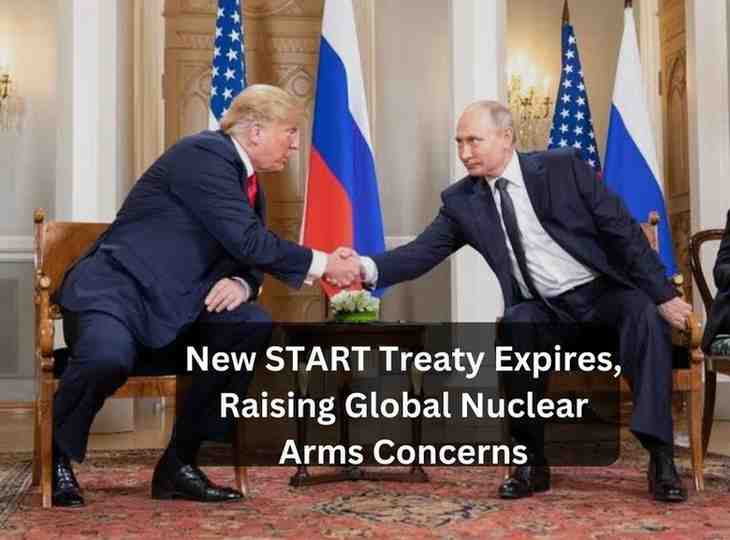
On February 5, 2026, the global security landscape quietly but decisively changed. The New Strategic Arms Reduction Treaty, better known as New START, officially expired—bringing to a close one of the most consequential nuclear arms control agreements of the modern era. With its end, the world has entered unfamiliar territory: for the first time in more than half a century, the two largest nuclear powers are no longer bound by a formal treaty limiting their strategic nuclear arsenals.
This development is more than a legal milestone. It signals a profound shift in how global nuclear stability is managed—and raises difficult questions about what comes next.
Understanding New START and Why It Mattered
Signed in 2010, New START was the product of years of diplomacy between the United States and Russia. The agreement was endorsed by then U.S. President Barack Obama and Russian President Dmitry Medvedev, reflecting a shared recognition that unchecked nuclear competition posed grave risks to both nations—and to the world.
At its core, New START aimed to cap and gradually reduce the most dangerous category of weapons ever created: strategic nuclear arms. The treaty placed firm, verifiable limits on:
- Deployed nuclear warheads
- Intercontinental ballistic missiles (ICBMs)
- Submarine-launched ballistic missiles (SLBMs)
- Heavy bombers designed to carry nuclear weapons
What made New START especially valuable was not only the limits themselves, but the verification system behind them. Through on-site inspections, data exchanges, and regular notifications, both sides could independently confirm that the other was honoring its commitments. This transparency reduced suspicion, lowered the risk of miscalculation, and helped maintain a fragile but vital balance of power.
For more than a decade, the treaty served as a stabilizing anchor during periods of political tension, leadership changes, and shifting global alliances.
Why the Treaty Reached Its Final Deadline
New START was initially scheduled to expire in 2021. Recognizing its importance, U.S. President Joe Biden agreed to extend the treaty for five additional years—the maximum extension allowed under its terms—pushing the deadline to February 5, 2026.
But the geopolitical environment deteriorated sharply in the years that followed. The war in Ukraine marked a breaking point in U.S.–Russia relations. Amid escalating tensions, Moscow announced it was suspending its participation in New START, halting inspections and freezing much of the treaty’s cooperative framework.
Although diplomatic channels remained open and discussions occasionally surfaced, no replacement agreement emerged. As the final deadline approached, it became clear that New START would expire without a successor—ending an era of structured nuclear arms control.
What Changes Now That New START Is Gone
With the treaty no longer in force, several critical safeguards have vanished:
- No legal caps on U.S. or Russian strategic nuclear weapons
- No inspection regime to verify deployments or reductions
- No mandatory data sharing on nuclear forces
- Greatly reduced transparency between the two nuclear superpowers
In practical terms, both countries are now free to expand or modernize their nuclear arsenals without violating international obligations. While neither side has announced immediate large-scale buildups, the absence of binding limits creates space for a renewed arms competition—especially as new technologies reshape military strategy.
This moment is historically significant. Since the early 1970s, some form of arms control agreement has always existed between Washington and Moscow. That continuity has now been broken.
Alarm Bells Across the International Community
The expiration of New START has drawn strong reactions from global leaders and security experts alike. United Nations Secretary-General António Guterres warned that the world is facing its most dangerous nuclear moment in decades, describing the situation as deeply troubling.
Analysts point to several growing risks:
- A renewed nuclear arms race, driven by rivalry and mistrust
- Pressure on other countries to expand or accelerate their own nuclear programs
- Higher chances of miscalculation, accidents, or unintended escalation
- Erosion of global confidence in arms control and diplomatic restraint
In a world already grappling with regional conflicts, cyber threats, and space militarization, the loss of nuclear guardrails adds yet another layer of instability.
Is There a Path Forward?
Despite the grim outlook, many diplomats believe this does not have to be the end of arms control—only a pause. History shows that even during periods of intense rivalry, nuclear agreements have been possible when leaders recognized the shared risks of escalation.
Any future treaty, however, would need to go far beyond the framework of New START. New realities demand new solutions, including:
- Advanced nuclear delivery systems and hypersonic weapons
- Cyber and space-based military capabilities
- Emerging technologies that blur conventional and nuclear thresholds
- The growing role of other nuclear-armed states, not just the U.S. and Russia
Rebuilding trust will be extraordinarily difficult, but the alternative—unrestricted nuclear competition—is far more dangerous.
Why the End of New START Matters to Everyone
Nuclear weapons are not an abstract policy issue reserved for major powers. Their consequences would be global, immediate, and irreversible. Arms control treaties like New START have never eliminated nuclear dangers entirely, but they have helped manage them—buying time, reducing fear, and keeping dialogue alive.
With New START gone:
- The global security system is weaker
- Diplomatic safety nets have frayed
- Responsibility now rests heavily on leadership, restraint, and renewed engagement
A Moment That Demands Attention
The expiration of the New START Treaty is a stark reminder that progress in global security is never permanent. It must be renewed, renegotiated, and defended. Whether this turning point leads to a destabilizing arms race or becomes the catalyst for a new generation of cooperation will depend on choices made in the years ahead.