Trump Sends Strong Message to Cuba: Negotiate Now or Risk Economic Fallout

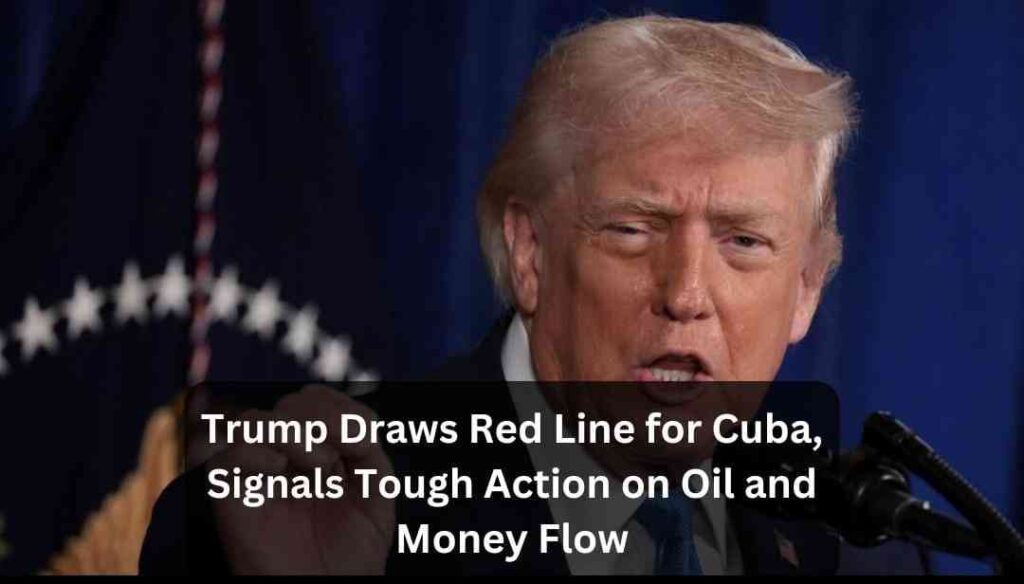
In a sharp and highly publicized statement delivered from Miami, former U.S. President Donald Trump issued a direct warning to the Cuban leadership, signaling that the island nation may soon face serious economic consequences if it does not move toward negotiations with the United States.
The message was clear and uncompromising: Cuba must reconsider its current alliances and open the door to diplomatic engagement with Washington — or risk losing one of its most critical economic lifelines.
A Warning With Real Consequences
Speaking to supporters and media, Trump emphasized that time is running out for Cuba. He suggested that Washington is prepared to act decisively if Havana continues to maintain close ties with Venezuela, particularly in areas that conflict with U.S. strategic interests.
At the heart of the warning lies Venezuela’s long-standing role as Cuba’s primary energy and financial supporter. For years, the island has depended heavily on Venezuelan oil shipments and economic assistance — support that Trump claims could be completely cut off if Cuba refuses to engage in talks.
According to Trump, such action would not be symbolic. It would directly impact Cuba’s energy supply, economy, and daily life for millions of citizens.
Why Venezuela Matters So Much to Cuba
To understand the seriousness of Trump’s message, it’s important to look at the deep-rooted relationship between Havana and Caracas.
For decades, Cuba and Venezuela have shared a close political and economic partnership. This alliance strengthened significantly during the leadership of Venezuela’s late president Hugo Chávez and continued under his successor Nicolás Maduro.
Under this arrangement:
- Venezuela supplied Cuba with oil at discounted rates or through barter-style agreements
- Cuba provided medical professionals, technical expertise, and political backing
- Both governments reinforced one another on the global diplomatic stage
For Cuba, this partnership has been nothing short of essential. Venezuelan oil fuels power generation, transportation, and industry across the island. Any disruption would immediately strain an economy already under pressure.
Trump’s Broader Strategy
Trump’s warning signals more than just concern over energy supplies — it reflects a broader geopolitical stance.
During his presidency, Trump pursued a hardline approach toward both Cuba and Venezuela, reinforcing sanctions and rolling back efforts at diplomatic normalization. His latest comments suggest that, if given influence again, he would likely revive or intensify those policies.
In Trump’s view, Cuba’s alliance with Venezuela undermines U.S. interests in the Western Hemisphere and contributes to regional instability. His message indicates that continued resistance from Havana could trigger increased economic pressure, tighter sanctions, or diplomatic isolation.
What Could Happen Next?
While no formal policy changes were announced, Trump’s remarks point toward several possible outcomes:
1. Energy and Economic Stress for Cuba
If Venezuelan oil shipments are disrupted or stopped, Cuba could face severe fuel shortages. Power outages, transportation disruptions, and economic contraction would likely follow — worsening conditions for everyday citizens.
2. Escalation of U.S. Pressure
Trump’s warning may be a signal of future actions, including stricter sanctions or renewed diplomatic pressure aimed at forcing negotiations.
3. Regional Ripple Effects
Latin American nations are watching closely. Any major shift in Cuba’s position could reshape alliances, influence trade relationships, and affect regional stability.
Global Reactions and Expert Views
At the time of Trump’s statement, there were no immediate official responses from Havana or Caracas. However, political analysts are already divided on what comes next.
Some experts believe Cuba’s worsening economic situation could push its leadership toward dialogue, especially if energy supplies become uncertain. Others argue that both Cuba and Venezuela are likely to resist what they see as external pressure, maintaining a long-standing stance against U.S. influence.
Why This Story Matters Beyond Politics
This issue goes far beyond diplomatic statements and political posturing. For millions of people in Cuba, energy shortages and economic strain directly affect daily life — from electricity availability to food supply and transportation.
For global observers, the situation highlights how international alliances, energy dependencies, and foreign policy decisions can have real human consequences.
It also serves as a reminder of how U.S. foreign policy decisions ripple across borders, shaping economies and lives far beyond Washington.
Donald Trump’s warning to Cuba marks a renewed moment of tension in U.S.–Latin American relations. With energy security, economic survival, and geopolitical alignment all at stake, Cuba now faces difficult choices.
Whether this moment leads to renewed negotiations or deeper confrontation remains uncertain. What is clear, however, is that Cuba’s future path — and its relationship with both Venezuela and the United States — is once again under intense global scrutiny.