Indian Rupee Slides to Historic Low Against the US Dollar: A Deep-Dive Explanation

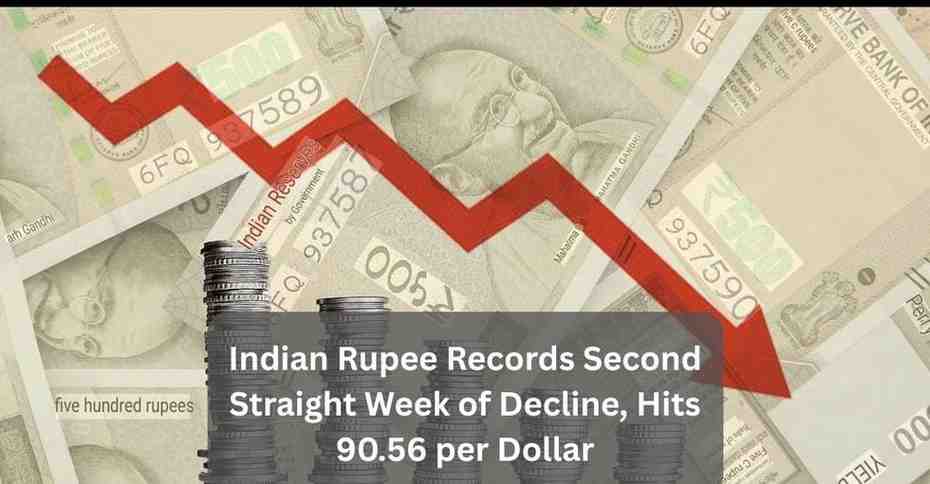
The Indian Rupee has slipped to an unprecedented low, breaching the ₹90 mark against the US dollar for the first time in history. Recent market data indicates the currency touching around ₹90.56 per dollar, extending its downward trend for the second consecutive week.
This sharp depreciation is not an isolated event. Instead, it reflects a broader mix of global economic pressures and domestic challenges that are steadily weighing on India’s currency.
The movement of the rupee is far more than just a number on a trading screen. It directly influences inflation, fuel prices, imports, foreign investments, government finances, and the everyday expenses faced by households across the country.
Why Currency Weakness Matters
When a country’s currency loses value against the dollar, the economic consequences ripple across multiple sectors.
A weaker rupee means:
- India must spend more rupees to purchase the same amount of dollars
- Imports become costlier, especially essential commodities
- Foreign debt repayment becomes more expensive
- Exporters may earn higher revenues, but consumers face higher prices
Crossing the ₹90-per-dollar level is not only symbolic; it intensifies concerns among policymakers, businesses, and investors about economic stability and future growth.
Key Factors Driving the Rupee’s Decline
Uncertainty Around US–India Trade Relations
One major source of pressure is the lack of clarity around a comprehensive trade agreement between India and the United States.
Trade agreements help by:
- Reducing tariff-related uncertainty
- Encouraging long-term investments
- Improving predictability for global businesses
In the absence of a clear framework, many foreign investors prefer to remain cautious. This hesitation limits dollar inflows into India, indirectly weakening the rupee.
Persistent Outflow of Foreign Investments
Foreign Institutional Investors (FIIs) have been gradually pulling money out of Indian equity and debt markets.
Key reasons include:
- Attractive interest rates in the United States
- Better short-term returns in developed markets
- Heightened global risk aversion
When foreign investors exit Indian assets, they convert rupees into dollars, increasing demand for the greenback and pushing the rupee lower.
Expanding Trade Deficit
India continues to import significantly more than it exports, putting constant pressure on the currency.
Major import items include:
- Crude oil and petroleum products
- Natural gas
- Electronics and semiconductors
- Industrial machinery
- Gold
Since most of these are paid for in dollars, higher imports mean greater dollar demand. Rising global crude oil prices have further worsened the trade imbalance, making the rupee more vulnerable.
Strong US Dollar Environment
Globally, the US dollar has remained exceptionally strong.
Reasons include:
- Tight monetary policy by the US Federal Reserve
- Higher interest rates in the US compared to emerging markets
- Strong demand for US Treasury bonds as safe assets
This has led to a broad strengthening of the dollar against most global currencies, not just the Indian rupee.
Global Economic and Geopolitical Risks
International uncertainty continues to dominate financial markets.
Contributing factors:
- Ongoing geopolitical tensions
- Fears of a global economic slowdown
- Disruptions in global supply chains
- Elevated inflation across major economies
During uncertain periods, investors typically move funds away from emerging markets and toward safe-haven currencies like the US dollar, weakening currencies such as the rupee.
Economic Impact Within India
Rising Inflationary Pressure
A weaker rupee makes imported goods more expensive, especially:
- Fuel and energy products
- Fertilizers
- Industrial raw materials
Higher fuel costs increase transportation and manufacturing expenses, which eventually translate into higher prices for essential goods, adding to inflation.
Uneven Impact on Businesses
Negatively affected sectors:
- Oil marketing companies
- Airlines
- Electronics manufacturers
- Automobile companies relying on imported components
Benefiting sectors:
- Information technology services
- Pharmaceuticals
- Textiles and apparel
- Export-oriented manufacturing firms
Exporters earn revenue in dollars, which converts into higher rupee earnings when the domestic currency weakens.
Impact on Consumers
For ordinary citizens, currency depreciation often shows up as:
- Higher petrol and diesel prices
- Costlier electronics and imported products
- Increased expenses for foreign travel and overseas education
- Pressure on monthly household budgets
Stock Market Implications
- Short-term market volatility increases
- Import-heavy companies may see pressure on stock prices
- Export-driven firms may outperform
- Overall investor sentiment remains cautious
RBI’s Role in Managing Volatility
The Reserve Bank of India acts as a key stabilizing force during periods of currency stress.
Possible RBI measures include:
- Selling dollars from foreign exchange reserves
- Managing excessive market volatility
- Adjusting liquidity conditions
- Using policy communication to reassure markets
While India has strong forex reserves, the RBI generally avoids defending any fixed exchange rate, focusing instead on maintaining orderly market conditions.
Effect on Oil and Gold
- A weaker rupee raises India’s oil import bill, straining government finances
- Domestic gold prices rise even if global prices remain stable
- Savings and investment patterns may shift toward inflation-hedging assets
What Could Happen Next?
The rupee’s future path will depend on several evolving factors:
- US Federal Reserve policy decisions
- Global interest rate movements
- Trends in crude oil prices
- Return of foreign investments
- Progress in international trade negotiations
- Overall global risk sentiment
Outlook:
- Short term: Continued pressure and high volatility
- Medium to long term: Structural reforms, export growth, controlled inflation, and stable macroeconomic fundamentals can support currency stability
The rupee’s fall to around ₹90.56 per dollar reflects a combination of strong global dollar demand, weak capital inflows, a widening trade deficit, and persistent global uncertainty.
While exporters may gain from the depreciation, rising import costs and inflation pose challenges for businesses and consumers alike. RBI intervention can help smooth volatility, but global forces remain the dominant influence.
As currency movements affect nearly every aspect of economic life, the situation demands close monitoring in the weeks and months ahead.