India–GCC Free Trade Agreement Talks Officially Kick Off, Marking a New Era of Economic Partnership

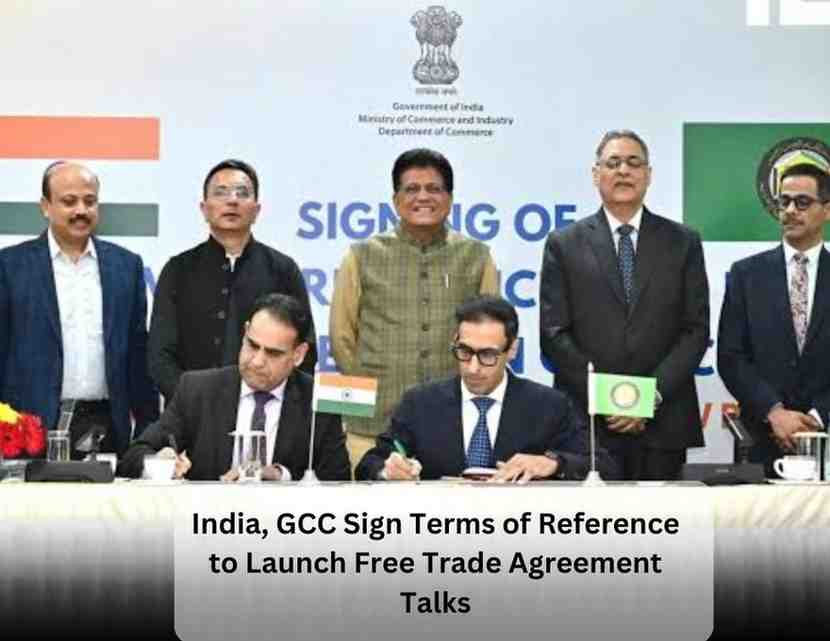
While the signing does not seal the deal, it officially opens the door to what could become one of India’s most consequential trade agreements—one that touches not only commerce, but jobs, energy security, and the lives of millions of Indian workers living abroad.
India has taken a major step toward deepening its economic and strategic engagement with the Gulf region by formally launching negotiations for a Free Trade Agreement (FTA) with the Gulf Cooperation Council. On February 5, representatives from both sides signed the Terms of Reference (ToR), a crucial first move that sets the framework for detailed trade talks in the months ahead.
This moment is being widely viewed as a turning point in India’s engagement with West Asia, signaling a shift from transactional trade to a more integrated, long-term economic partnership.
What the India–GCC Free Trade Agreement Is Really About
At its core, the proposed FTA aims to make it easier for businesses, investors, and professionals to operate seamlessly across borders. The agreement under negotiation is expected to focus on reducing or eliminating tariffs, cutting red tape, simplifying regulations, and improving market access for goods and services.
The Gulf Cooperation Council brings together six influential economies:
- Saudi Arabia
- United Arab Emirates
- Qatar
- Kuwait
- Oman
- Bahrain
Together, these countries form one of India’s largest and most strategically important trading blocs. They are not only rich in energy resources but also host one of the biggest Indian expatriate communities anywhere in the world.
By signing the ToR, both sides have agreed on the scope and structure of the negotiations—essentially deciding what will be discussed and how the talks will proceed.
Why This Agreement Matters So Much for India
Expanding Beyond Oil-Centric Trade
India already conducts massive trade with GCC nations, running into hundreds of billions of dollars annually. However, a large portion of this exchange is still driven by crude oil and natural gas imports.
The proposed FTA aims to rebalance this relationship by opening up Gulf markets more effectively to Indian non-oil exports. This could be a game-changer for Indian manufacturers and service providers looking to grow internationally.
Sectors likely to see strong gains include engineering goods, pharmaceuticals, textiles, automobiles, gems and jewellery, agricultural products, and IT services. For India, this diversification supports its broader ambition of becoming a global manufacturing and export powerhouse.
A Potential Lifeline for Indian Workers in the Gulf
One of the most human and impactful dimensions of the India–GCC FTA lies in labor mobility and worker protection.
Nearly 10 million Indians currently live and work across GCC countries. They form the backbone of several Gulf economies and send billions of dollars back home each year in remittances. Yet many face challenges related to visas, job security, contract transparency, and recognition of qualifications.
The FTA talks are expected to address these concerns through measures such as faster visa processes, improved labor protections, recognition of Indian professional credentials, and clearer employment contracts. If implemented well, this could significantly improve working conditions and long-term security for Indian workers abroad.
Strengthening Energy Security While Looking to the Future
The Gulf region remains India’s most critical source of energy imports. A deeper trade agreement could help ensure stable, long-term access to oil and gas while reducing exposure to global price shocks.
Beyond traditional energy, the FTA could also pave the way for cooperation in emerging areas such as renewable energy, green hydrogen, clean technology, and climate-friendly infrastructure. These areas align closely with India’s sustainability goals and the Gulf’s own plans to diversify their economies.
What GCC Countries Stand to Gain
The benefits of the agreement are far from one-sided. GCC nations are actively trying to reduce their dependence on oil revenues and build diversified, innovation-driven economies.
India offers them access to one of the world’s largest consumer markets, a fast-growing middle class, and a massive pool of skilled professionals. Increased Indian investment in infrastructure, logistics, manufacturing, healthcare, and digital services could support the Gulf’s long-term development strategies.
At the same time, agricultural imports from India can strengthen food security across the region—an increasingly important priority for Gulf states.
Strategic Importance Beyond Trade Numbers
This FTA is not just about tariffs and exports. It carries deep geopolitical and strategic significance.
In a global environment marked by supply chain disruptions, economic uncertainty, and shifting alliances, closer India–GCC ties offer stability, reliability, and mutual trust. The agreement also fits neatly into India’s broader vision of strengthening partnerships across West Asia and positioning itself as a dependable global economic player.
What Comes Next in the Negotiation Process
With the Terms of Reference in place, both sides will move into formal negotiation rounds. These discussions are expected to cover tariff schedules, rules of origin, investment protections, services trade, labor frameworks, and dispute resolution mechanisms.
Trade experts caution that such comprehensive agreements take time, often stretching over multiple rounds of talks. However, the strong political intent on both sides suggests steady momentum rather than stalled progress.
What This Means for Indian Businesses and MSMEs
For Indian companies—especially small and medium enterprises—the FTA could unlock new growth opportunities. Lower tariffs and simpler procedures would reduce costs, improve competitiveness, and make it easier to integrate into regional supply chains.
Greater access to Gulf markets could also attract foreign investment into India, support job creation, and strengthen domestic manufacturing.
A Pivotal Chapter in India–Gulf Relations
The launch of India–GCC FTA negotiations represents more than a trade initiative—it reflects a shared vision for long-term cooperation, economic resilience, and people-focused growth.
If successfully concluded, this agreement has the potential to become one of India’s most influential international partnerships, delivering tangible benefits for exporters, workers, investors, and consumers alike.
As negotiations unfold, the outcome could redefine how India engages with the Gulf—and strengthen its position in an increasingly interconnected global economy.