China’s Factories Close the Year on a Brighter Note as Manufacturing Shows Signs of Revival

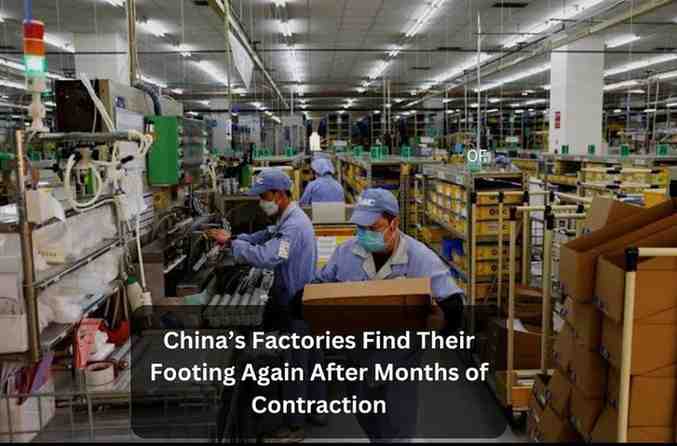
After much of the year being dominated by economic uncertainty, weak demand, and growing worries about a slowdown, China has finally received a dose of positive news. As 2025 draws to a close, fresh data suggests that the country’s manufacturing sector has returned to growth — offering cautious optimism that the world’s second-largest economy may be stabilizing.
December marked a turning point for Chinese factories, with official figures showing the first expansion in manufacturing activity since March. For policymakers, businesses, and investors alike, this shift comes as a welcome relief after months of contraction that weighed heavily on sentiment.
Manufacturing Activity Moves Back Into Growth
According to data released by National Bureau of Statistics, China’s official Manufacturing Purchasing Managers’ Index (PMI) rose to 50.1 in December, up sharply from 49.2 in November.
The PMI is a closely watched indicator of economic health. A reading above 50 signals expansion, while anything below that level indicates contraction. Crossing back above this threshold is significant, as it marks the first expansion in nine months, ending a prolonged period of stagnation in factory activity.
What made the data even more encouraging was that economists had largely expected no improvement at all. Instead, the stronger-than-anticipated reading surprised markets and suggested that recent policy measures and stabilizing domestic demand may finally be gaining traction.
Broader Economic Indicators Also Improve
The recovery was not limited to manufacturing alone. Other key indicators showed improvement as well, pointing to a more balanced pickup across the economy.
- The Composite PMI, which combines manufacturing and services activity, climbed to 50.7 from 49.7.
- The Non-Manufacturing PMI, covering services and construction, rose to 50.2, compared with 49.5 a month earlier.
Together, these figures suggest that economic momentum is gradually returning across multiple sectors, rather than being confined only to factory floors.
New Orders Signal Renewed Demand
One of the most encouraging aspects of the December data was the rise in new orders. Officials noted that both production and demand strengthened toward the end of the year, reflecting better sales conditions for manufacturers.
According to Huo Lihui, chief statistician at the National Bureau of Statistics, businesses saw a noticeable improvement in incoming orders — an important signal after months of weak consumer spending and cautious corporate behavior.
This pickup in demand suggests that companies may be starting to regain confidence, adjusting production plans in response to better market conditions.
Private Surveys Support the Official Data
Private-sector research echoed the government’s findings. A separate manufacturing survey compiled by RatingDog showed factory activity improving to 50.1 in December, up from 49.9 in November.
Yao Yu, founder of RatingDog, said the sector has clearly moved back into expansion territory, driven by a steady rise in overall new orders. He noted that manufacturers have reported growth in new business for seven consecutive months, helped by new product launches and renewed business development efforts.
However, Yao also struck a cautious tone. While companies are generally optimistic about the outlook for 2026, confidence levels remain below historical averages, reflecting lingering concerns about the broader economy.
Large Companies Lead the Recovery
The rebound in manufacturing has not been evenly distributed across all business sizes.
- Large enterprises posted the strongest performance, with their PMI jumping to 50.8, a sharp rise of 1.5 points from November.
- Medium-sized firms came close to stability, with a PMI of 49.8, though they remained slightly in contraction.
- Small enterprises continued to struggle, with their PMI slipping further to 48.6.
The data highlights a familiar trend: larger companies, with stronger balance sheets and better access to financing, are recovering faster than smaller firms, which remain under pressure from weak demand and limited resources.
Financial Markets React With Caution
Despite the encouraging data, market reactions were mixed, reflecting ongoing concerns about deeper structural challenges.
- Hong Kong’s Hang Seng Index fell 0.83%.
- China’s mainland CSI 300 Index edged up a modest 0.33%.
Investors appear to be balancing the positive manufacturing news against unresolved issues such as the prolonged property downturn, fragile consumer confidence, and broader financial risks.
Interest Rates Remain Unchanged
Earlier in the week, China’s central bank chose to keep its benchmark loan prime rates unchanged, resisting calls for additional stimulus.
This decision came after a weak November, when retail sales, industrial output, and fixed-asset investment all fell short of expectations. The ongoing slump in the real estate sector continues to act as a major drag on overall economic growth, limiting the impact of improvements elsewhere.
Economists Call the Data a Positive Surprise
Market analysts were quick to note the significance of the December PMI figures. Hao Zhou, chief economist at Guotai Junan International, described the results as a “very positive surprise.”
He said investors have been deeply worried about property-sector stress, stock-market volatility, and sluggish consumer demand. Against this backdrop, the manufacturing rebound suggests that the economy may finally be finding a floor.
“The data shows that the recovery trend remains intact and momentum is still present,” Zhou said, adding that a stronger manufacturing sector could help support broader economic healing in the months ahead.
A Modest but Meaningful Step Forward
While December’s improvement does not erase China’s economic challenges, it does mark a meaningful shift in direction. After nine difficult months, factories are expanding again, new orders are increasing, and large manufacturers are leading the recovery.
Whether this momentum can carry into the new year will depend on several factors — including consumer confidence, further policy support, and progress in stabilizing the property market.
For now, China ends the year with something it has been missing for much of 2025: a genuine, if cautious, sense of economic optimism.