Adani Green Energy’s Big Nature Promise: No Biodiversity Loss by 2030

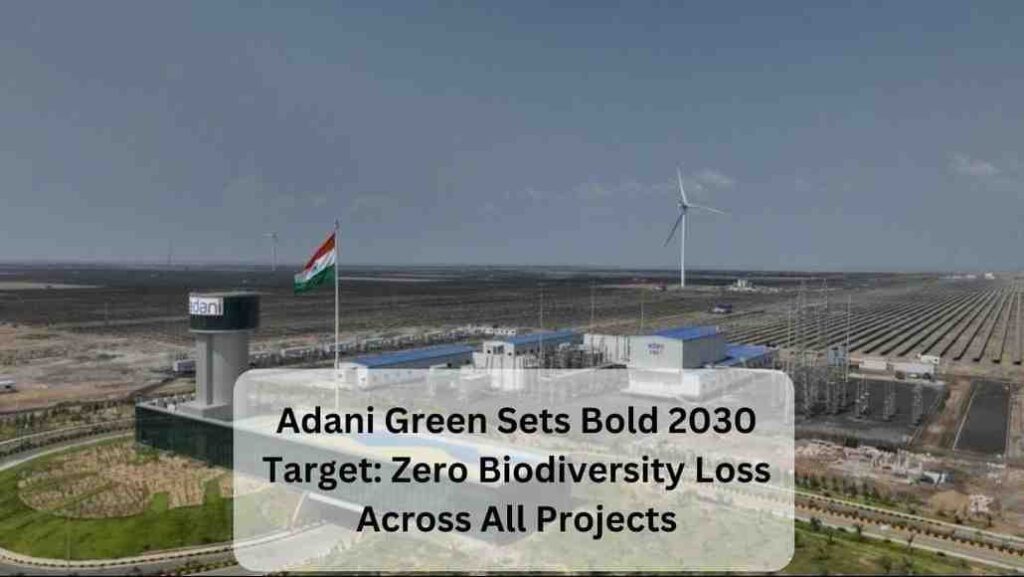
Adani Green Energy Ltd (AGEL) has taken a major leap in its sustainability journey by committing to ensure “no net loss of biodiversity” by 2030. In simple terms, the company wants its rapid renewable energy expansion to co-exist with nature, without harming local ecosystems or wildlife.
This pledge marks a strong move toward nature-positive development, placing AGEL among the growing number of global companies prioritizing environmental protection alongside business growth.
A New Chapter in AGEL’s Environmental Strategy
As part of this initiative, AGEL has started aligning its operations with the Taskforce on Nature-related Financial Disclosures (TNFD) framework.
For many businesses, TNFD acts like a guidebook that helps them:
- Identify how their activities impact nature
- Measure ecological risks
- Report these findings transparently
- Build strategies to protect ecosystems
By adopting this globally recognized framework, AGEL is signaling that its sustainability approach goes beyond carbon reduction—it aims to protect biodiversity, natural landscapes, and ecological health.
Why This Step Is Important
Even though renewable energy is considered clean and green, setting up large solar parks or wind farms can sometimes disturb local habitats. Recognizing this, AGEL plans to make sure that any future development is designed in harmony with nature.
The company aims to:
- Safeguard environmentally sensitive zones around project areas
- Restore degraded habitats and support natural regeneration
- Create wildlife-friendly project designs
- Maintain transparency through continuous ecological reporting
The “no net loss” concept means if any damage to biodiversity happens during project development, AGEL will balance it through equivalent or greater conservation and restoration efforts.
India is scaling up renewable energy faster than ever, and AGAG—already a leader with one of the world’s largest renewable portfolios—is setting a benchmark for responsible development.
This biodiversity-focused vision reflects a global shift where companies are expected not just to reduce carbon emissions, but also to actively protect natural ecosystems.
Such commitments help companies build trust with investors, communities, regulators, and environmental groups.
What the Road to 2030 Looks Like
AGEL has outlined a clear plan to track its biodiversity performance across existing and upcoming sites. The next few years will include:
- Detailed biodiversity mapping of all project regions
- Long-term monitoring of ecological changes
- Working closely with conservation scientists and environmental experts
- TNFD-based reporting to share progress openly
With climate and biodiversity concerns becoming central to global decision-making, AGEL’s initiative highlights that renewable energy growth and environmental conservation can move forward tog