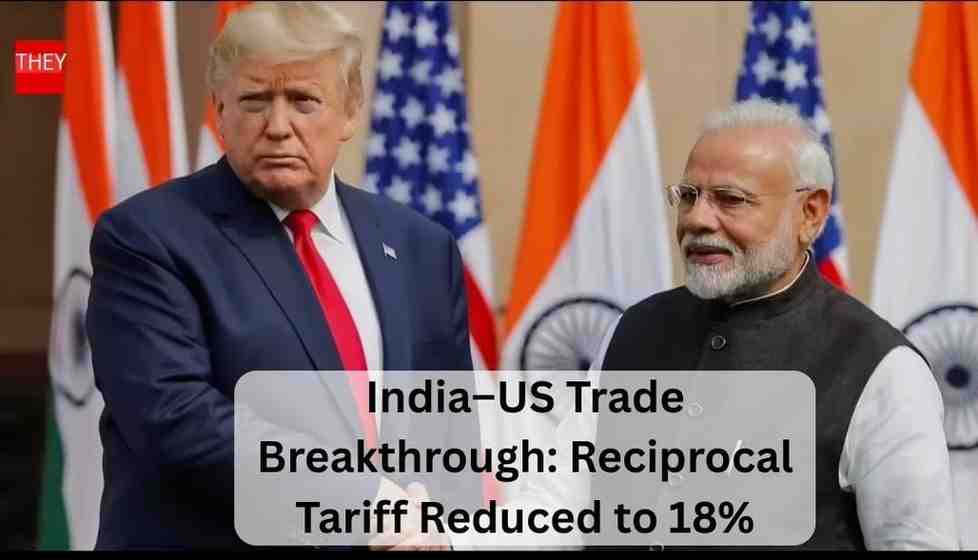
The agreement was announced following high-level discussions between US President Donald Trump and Indian Prime Minister Narendra Modi, signaling renewed momentum in bilateral relations at a time when global trade dynamics are rapidly evolving.
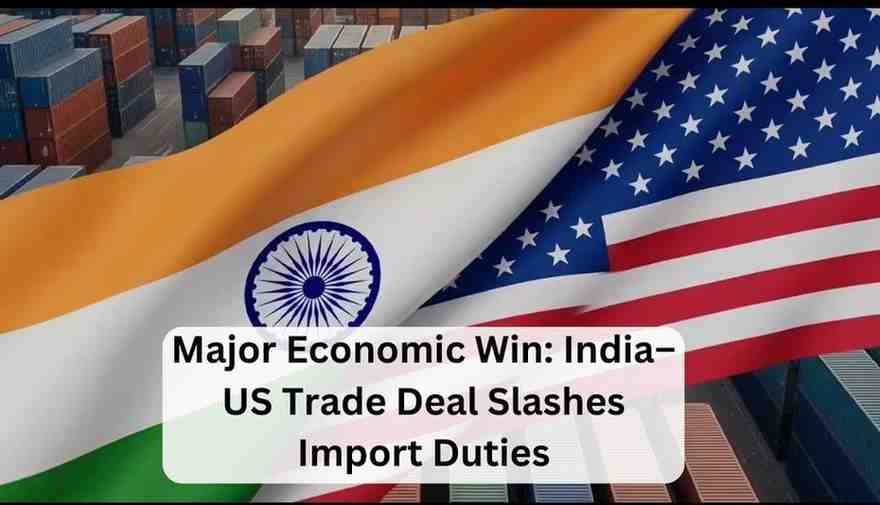
In a major development that strengthens economic ties between the world’s two largest democracies, India and the United States have agreed on a new trade framework that significantly lowers reciprocal tariffs. Under the fresh agreement, import duties between the two countries will be reduced from 25% to 18%, marking a meaningful step toward deeper trade cooperation and long-term economic partnership.
A Turning Point in India–US Trade Relations
For years, trade negotiations between India and the United States have been marked by disagreements over tariffs, market access, and regulatory hurdles. The latest deal reflects a noticeable shift in tone—from friction to collaboration. By agreeing to reduce reciprocal tariffs, both nations have demonstrated a shared commitment to expanding trade volumes, strengthening supply chains, and building a more predictable trade environment.
The tariff cut is expected to make Indian goods more competitive in the US market, while also offering American exporters improved access to one of the world’s fastest-growing consumer economies.
Understanding Reciprocal Tariffs and Their Impact
Reciprocal tariffs are import duties imposed by one country to mirror the tariffs applied by another. Until now, many Indian exports entering the US were subject to duties as high as 25%, making them less attractive compared to products from other exporting nations.
With the new agreement in place:
- Tariff rates will be reduced to 18%
- Indian exporters gain a pricing advantage
- US importers may benefit from lower sourcing costs
- Bilateral trade volumes are expected to rise gradually
Industries likely to see immediate benefits include textiles, pharmaceuticals, chemicals, engineering goods, auto components, and select manufactured products—sectors that form the backbone of India’s export economy.
India’s Role and Market Access Commitments
As part of the broader trade understanding, India has agreed to gradually ease tariff and non-tariff barriers on specific American goods. These changes will be implemented in phases and are expected to cover:
- Agricultural and food products
- Energy commodities such as crude oil and coal
- Industrial machinery and technology-related goods
Indian authorities have emphasized that these adjustments will be carefully calibrated to protect domestic industries while ensuring fair competition and consumer benefits.
Energy Cooperation Emerges as a Key Pillar
One of the most strategic aspects of the agreement is enhanced energy cooperation. The United States has been keen to expand its energy exports, while India—among the fastest-growing energy consumers globally—is looking to diversify its supply sources.
By increasing energy trade with the US, India aims to reduce over-dependence on limited suppliers, strengthen energy security, and contribute to a more balanced trade relationship. For the US, expanded energy exports to India help narrow trade deficits and reinforce long-term commercial ties.
Leaders Emphasize Trust and Strategic Alignment
Both leaders highlighted the importance of mutual trust and shared goals in finalizing the agreement.
President Donald Trump described the deal as a fair and balanced trade arrangement that supports American businesses while deepening ties with India. Prime Minister Narendra Modi, meanwhile, characterized the agreement as a reflection of growing strategic alignment, mutual respect, and confidence between the two nations.
Beyond trade, the discussions also reinforced cooperation in areas such as defense, technology, innovation, and supply-chain resilience.
What This Means for Indian Businesses
For Indian exporters, the tariff reduction could be a game-changer. Lower duties translate into:
- Improved competitiveness in the US market
- Higher export volumes over time
- Increased revenue for MSMEs and large manufacturers
- Potential job creation in export-driven industries
Sectors focused on manufacturing and value-added goods are expected to benefit the most as US buyers look for reliable alternatives in global supply chains.
Impact on Indian Consumers
Indian consumers may also feel the effects of the agreement. Reduced barriers on American products could lead to:
- Greater availability of high-quality imported goods
- Increased competition, improving pricing and quality
- Better access to advanced technology and industrial equipment
Over time, this could help raise overall standards in several consumer and industrial segments.
India Gains a Strategic Trade Advantage
With reciprocal tariffs now set at 18%, India gains an edge over several competing export economies that continue to face higher duties in the US market. At a time when global companies are actively diversifying supply chains, this positions India as a more attractive and reliable trade partner.
What Comes Next?
While the headline agreement has been announced, detailed sector-wise guidelines are expected to be released gradually. These will outline:
- Specific tariff reductions by industry
- Implementation timelines
- Regulatory and compliance mechanisms
Trade analysts believe this agreement could eventually pave the way for a broader free trade agreement or a comprehensive economic partnership framework between India and the United States.
A New Phase in Bilateral Economic Cooperation
The US–India trade deal comes at a crucial moment when global trade is being reshaped by geopolitical tensions, supply-chain realignments, and economic uncertainty. Against this backdrop, the agreement sends a clear message: cooperation between major democracies remains essential for global economic stability.
By lowering tariffs, improving market access, and aligning strategic interests, India and the United States have taken a decisive step toward a more balanced, forward-looking trade relationship.
For businesses, investors, and policymakers alike, this agreement is more than just a tariff adjustment—it is a signal of deeper economic trust and a long-term partnership poised to grow stronger in the years ahead.