The United States has once again stopped an oil tanker linked to Venezuela, sharply escalating tensions between Washington and Caracas and signaling a far more aggressive phase in President Donald Trump’s renewed pressure campaign against Venezuelan leader Nicolás Maduro.
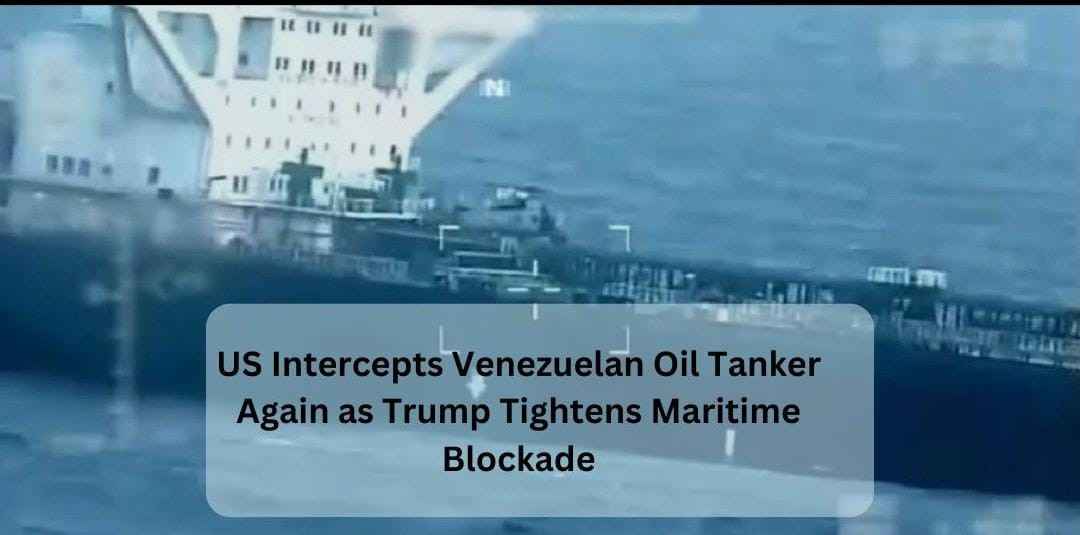
This marks the second oil tanker interception in less than two weeks, reinforcing fears that US sanctions enforcement is now evolving into something much closer to a de facto maritime blockade.
The early-morning operation was carried out by the US Coast Guard with support from the Department of Defense. According to US officials, the tanker — named Centuries — had recently departed from Venezuelan waters before being intercepted in international seas.
From Sanctions to Sea Power
The latest action follows President Trump’s recent announcement that the United States would no longer tolerate sanctioned oil moving in and out of Venezuela. Trump described the strategy as a “blockade,” a term that immediately raised alarms among legal experts and foreign governments.
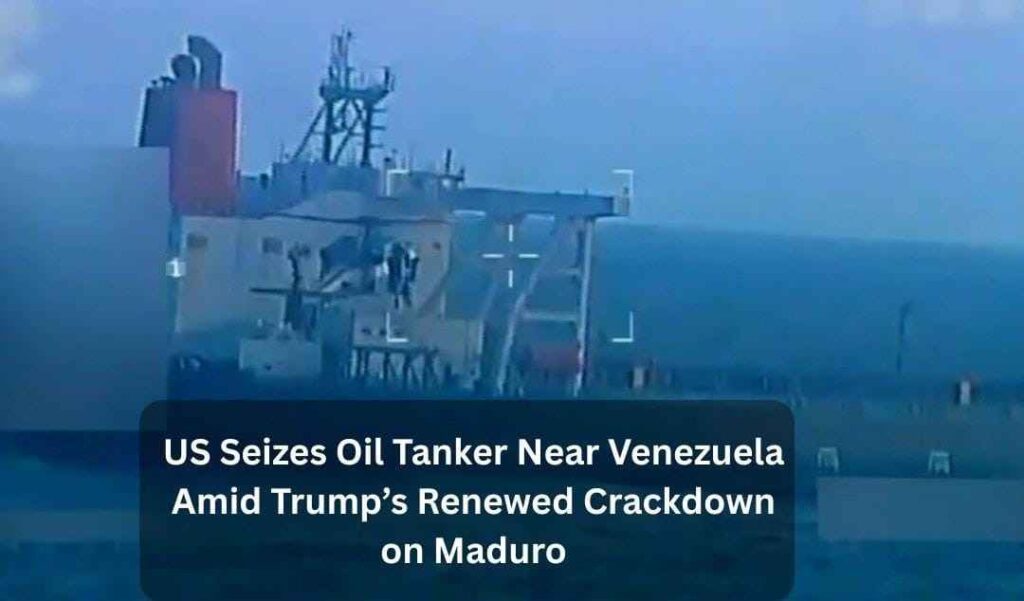
Just days earlier, US forces seized another tanker, the Skipper, which officials claimed was part of a so-called “shadow fleet” — vessels allegedly operating under false registrations, unclear ownership, or without proper national identification to evade sanctions.
At the time, many analysts believed the Skipper seizure was meant as a warning. The interception of the Centuries now suggests that Washington is widening its net and preparing to actively deter any tanker suspected of carrying Venezuelan crude.
Dramatic Boarding at Sea
US Homeland Security Secretary Kristi Noem later released video footage showing armed personnel descending from a helicopter onto the deck of the tanker — a clear signal that the operation was both deliberate and highly visible.
Officials stated that the boarding was conducted with the vessel’s consent, meaning the ship voluntarily stopped and allowed US forces onboard.
“This is about stopping the illegal movement of oil that funds criminal networks and narco-terrorism,” Noem said.
“We will find you, and we will stop you.”
Shipping data indicates that the Centuries was flying a Panamanian flag and had been operating near Venezuelan waters shortly before the interception. However, US authorities have not publicly confirmed whether the tanker itself was under direct sanctions at the time.
Legal Grey Zone or Strategic Message?
The operation has triggered debate within the global shipping and maritime law community.
Several maritime experts note that available databases suggest the tanker was legally registered and properly flagged, raising questions about whether the seizure was purely a legal enforcement action or a strategic move designed to intimidate other vessels.
While the ship’s status remains disputed, experts widely agree that oil originating from Venezuela is subject to US sanctions, regardless of the vessel carrying it.
“This looks less like routine enforcement and more like a warning shot,” one maritime analyst said.
“The goal appears to be discouraging any tanker from doing business with Venezuela.”
White House Defends the Seizure
The White House has firmly defended the operation, insisting that the tanker was falsely flagged and involved in transporting sanctioned Venezuelan oil.
Officials claim the cargo was illegally obtained and part of a shadow trading network designed to bypass US sanctions. However, detailed evidence supporting these claims has not been made public, leaving room for international criticism.
Venezuela Calls It “Piracy”
Caracas reacted with fury.
In an official statement, Venezuela’s government condemned the interception as an act of “criminal piracy” and accused the United States of violating international law.
“The hijacking of a private vessel and the forced detention of its crew in international waters is unacceptable,” the statement said.
Venezuela announced plans to raise the issue at international forums, including the United Nations Security Council.
President Maduro’s government has long accused Washington of using sanctions, military pressure, and economic warfare as tools to destabilize the country and force regime change.
Old Oil Grievances Resurface
President Trump has openly tied the tanker seizures to long-standing disputes over US oil investments in Venezuela.
American companies once dominated Venezuela’s oil sector before it was nationalized decades ago — a process that expanded significantly under former president Hugo Chávez and later Maduro. Compensation disputes have lingered ever since.
In 2014, an international arbitration panel ordered Venezuela to pay $1.6 billion to a major US oil company — a ruling Caracas has resisted.
“They took our oil. They took our energy rights,” Trump said this week.
“We want it back.”
Those comments suggest the current standoff is fueled not just by sanctions enforcement, but by unresolved economic and political grievances stretching back decades.
Broader Military Pressure in the Region
The tanker seizures are unfolding alongside a wider US military buildup in the Caribbean and eastern Pacific.
The Trump administration has authorized numerous strikes on vessels it claims are linked to drug trafficking networks. According to reports, more than 100 people have been killed in dozens of such operations since September — a figure that has drawn concern from lawmakers and human rights groups.
Critics argue the administration has not provided sufficient public evidence linking many of the targeted vessels to narcotics smuggling. The White House, however, insists the United States is engaged in an armed struggle against transnational criminal networks and has directly linked Venezuela to those operations.
Maduro himself faces US federal charges related to narco-terrorism, further intensifying the confrontation.
With the largest US naval presence in the region in decades now deployed, shipping routes are already changing. Industry data shows tankers rerouting away from Venezuelan waters to avoid potential interception.
Maduro continues to argue that Washington’s ultimate goal is regime change. That narrative was reinforced when senior figures in Trump’s administration stated that pressure would continue until Maduro backs down.
As tensions rise, the seizure of the Centuries may mark a turning point — transforming sanctions enforcement into a sustained maritime standoff, with serious consequences for global energy markets, international law, and regional stability.