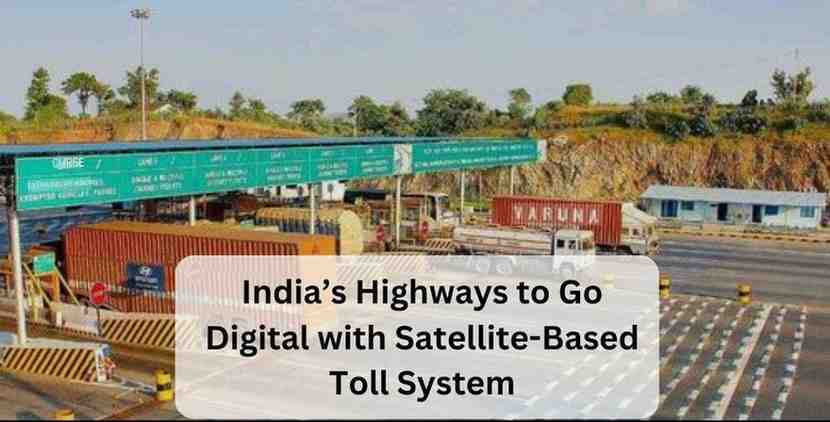
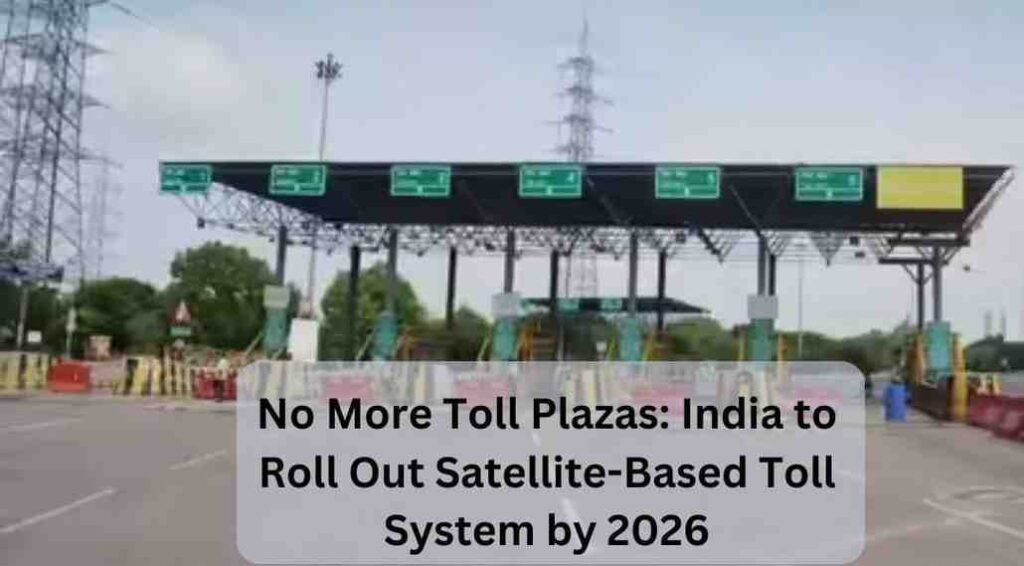
India is set to witness a historic shift in the way tolls are collected on national highways. The Union Government is planning to roll out a satellite-based toll collection system across the country by the end of 2026, a move that promises to make road travel smoother, faster, and more transparent for millions of motorists.
Union Minister for Road Transport and Highways Nitin Gadkari shared this major update in the Lok Sabha, calling it a crucial step toward modernising India’s highway infrastructure and aligning it with global technology-driven transport systems.
Goodbye to Toll Plazas and Long Queues
One of the biggest changes under the new system will be the gradual elimination of physical toll plazas on national highways. Once the satellite-based model is fully operational, drivers will no longer need to stop, slow down, or wait in long queues to pay toll charges.
Instead of charging a fixed toll at specific locations, the new mechanism will calculate toll fees based on the actual distance a vehicle travels on the highway. This ensures a fairer system where motorists pay only for the road usage they make — no more, no less.
According to the minister, removing toll booths will significantly reduce congestion, cut travel time, save fuel, and lower vehicle emissions caused by frequent stopping and idling at toll gates.
How the New Toll System Will Function
The upcoming toll collection model will rely on satellite navigation and GPS-based tracking technology. Vehicles will be fitted with compatible tracking devices or linked systems that monitor their movement on national highways.
Here’s how it will work in simple terms:
- When a vehicle enters a highway stretch, the system records its entry
- As it travels, the distance covered is tracked via satellite
- Upon exiting the highway, the exact distance travelled is calculated
- The toll amount is automatically deducted from the vehicle owner’s linked account
The entire process will be fully automated, requiring no manual intervention, physical barriers, or toll staff interaction.
The government believes this technology will be more accurate and transparent than the existing FASTag system, which still depends on physical toll booths and infrastructure.
Massive Boost Expected in Toll Revenue
Apart from convenience, the new system is expected to bring substantial financial gains. Nitin Gadkari highlighted that distance-based tolling and better tracking could sharply improve compliance and reduce revenue leakage.
According to estimates:
- Toll operators and concessionaires could earn an additional ₹1,500 crore
- The central government’s toll revenue may rise by nearly ₹6,000 crore
These gains are expected to come from precise charging, reduced evasion, and improved efficiency in toll collection.
Big Relief for Commuters and Transport Industry
For everyday commuters, the satellite-based toll system promises uninterrupted, stress-free highway travel. No sudden braking, no waiting in lines, and no confusion over toll deductions.
Commercial vehicle owners, logistics companies, and fleet operators are also likely to benefit significantly:
- Faster delivery times
- Lower fuel costs
- Predictable toll expenses
- Reduced wear and tear on vehicles
The smooth traffic flow is also expected to improve road safety and driving comfort, especially on busy highway corridors.
Building Trust Through Transparency
Another major advantage of the new system is transparency. Since toll charges will be automatically calculated and digitally recorded, disputes over incorrect toll deductions are expected to drop sharply.
The government believes this will build greater trust among road users, as every kilometre travelled and every rupee charged will be clearly accounted for.
Part of India’s Smart Mobility Vision
The satellite-based toll initiative fits into the government’s broader vision of digital governance, smart mobility, and technology-led infrastructure development. Many advanced economies already use similar distance-based tolling systems, and India is now preparing to join that league.
The rollout will take place in phases, with pilot testing, legal frameworks, technical validation, and public awareness campaigns planned to ensure a smooth transition before nationwide implementation by 2026.
A New Era for Highway Travel in India
Once fully implemented, the satellite-based toll collection system could completely reshape highway travel in India. Faster journeys, fair pricing, cleaner roads, and better revenue management mark this reform as one of the most transformative infrastructure upgrades in recent years.
By leveraging satellite technology and digital systems, the government aims to deliver efficient, transparent, and citizen-friendly road services, setting the stage for the next generation of smart transportation in India.