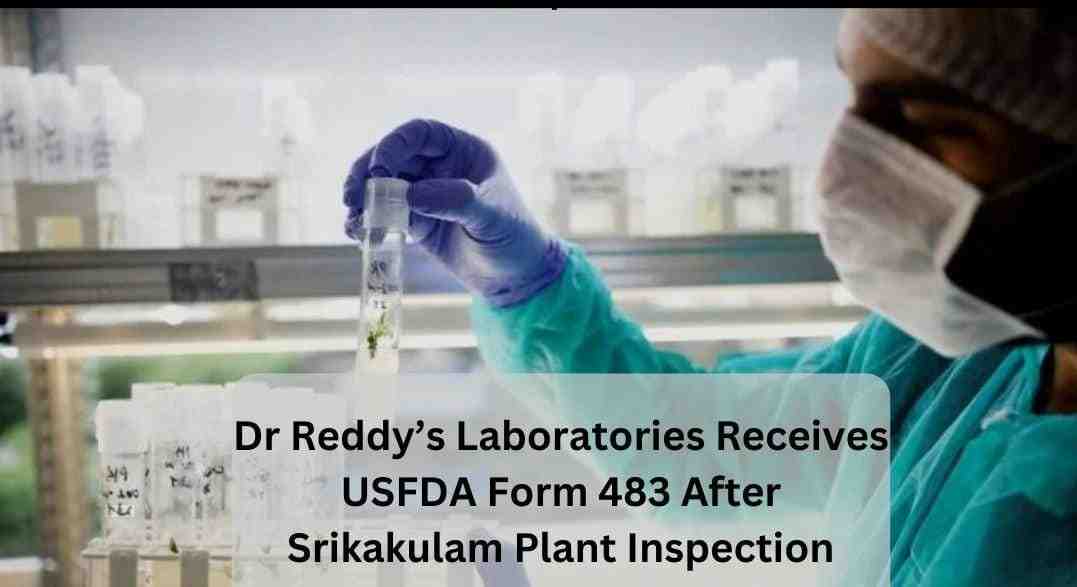
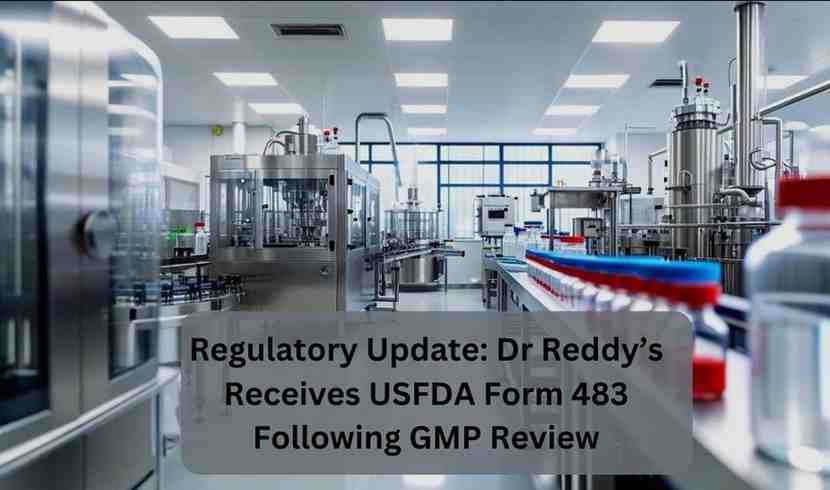
Dr. Reddy’s Laboratories Ltd, one of India’s most prominent pharmaceutical companies, has once again found itself under the regulatory spotlight after the US Food and Drug Administration (USFDA) issued a Form 483 following an inspection at its manufacturing facility in Srikakulam, Andhra Pradesh.
While regulatory inspections are a routine part of operating in global pharmaceutical markets—especially the highly regulated US—the outcome is still closely watched by investors, analysts, and industry observers. The inspection resulted in five observations, prompting the company to initiate corrective actions as per standard regulatory procedures.
Importantly, this development does not indicate any immediate enforcement action, production halt, or export restriction. Instead, it represents a corrective-stage regulatory process that many global drugmakers encounter from time to time.
What Happened During the USFDA Inspection?
The USFDA carried out a detailed review of operations at the Srikakulam facility as part of its regular oversight of overseas manufacturing units that supply medicines to the US market.
Key Details of the Inspection:
- Manufacturing Site: Srikakulam Plant, Andhra Pradesh
- Inspection Scope:
- Good Manufacturing Practices (GMP)
- Pre-Approval Inspection (PAI)
- Outcome: USFDA issued a Form 483
- Total Observations: Five
The inspection examined manufacturing processes, quality controls, documentation systems, and compliance procedures. Based on its findings, FDA inspectors recorded certain observations that they believe require improvement or clarification.
Understanding a USFDA Form 483 — What It Really Means
A Form 483 is often misunderstood by the public and sometimes even by market participants. In reality, it is not a penalty, nor does it automatically lead to serious regulatory consequences.
A Form 483 is essentially a list of observations made by FDA inspectors when they believe certain practices may not fully align with regulatory expectations.
What a Form 483 Does
Not Mean:
- ❌ It is not a warning letter
- ❌ It does not imply product quality failure
- ❌ It does not lead to automatic bans or import alerts
- ❌ It does not stop ongoing exports
What It Doe Mean:
- The company is expected to review the observations carefully
- A formal written response must be submitted, typically within 15 working days
- The response must include:
- Root cause analysis
- Corrective and Preventive Actions (CAPA)
- Clear timelines for implementation
The FDA evaluates this response before deciding whether further regulatory action is necessary.
How Serious Is This for Dr. Reddy’s?
For Dr. Reddy’s Laboratories, this development is widely seen as a manageable regulatory event rather than a major operational setback.
The company has decades of experience dealing with global regulators across the US, Europe, Canada, and emerging markets. Historically, Dr. Reddy’s has addressed such observations through corrective actions without long-term disruption to its business.
Industry analysts generally consider Form 483 observations to be part of the normal regulatory lifecycle for large pharmaceutical manufacturers, especially those with extensive US exposure.
Recent Regulatory Context Around Dr. Reddy’s
The Srikakulam inspection comes at a time when Dr. Reddy’s has been navigating multiple regulatory and legal developments globally.
Key Recent Developments:
- The Srikakulam plant previously received a “Voluntary Action Indicated” (VAI) status, which suggests that while issues were observed, they were not severe enough to warrant enforcement action.
- A High Court recently declined to halt the company’s exports of semaglutide, allowing Dr. Reddy’s to continue shipping the drug internationally.
- The company continues to face routine regulatory scrutiny in markets such as the US and Canada, particularly for complex generics, injectables, and biosimilars, which naturally attract higher regulatory oversight.
This broader context suggests that the current Form 483 is part of an ongoing compliance cycle rather than an isolated red flag.
Market Reaction: Calm, Not Panic
Despite frequent headlines around regulatory inspections, the stock market’s response to this development has been relatively measured.
Approximate Stock Performance:
- 1 Day: +0.46%
- 1 Month: +4.04%
- 1 Year: +2.72%
- 5 Years: +27.35%
This stability indicates that investors are largely distinguishing between routine compliance observations and more severe regulatory actions such as warning letters or import alerts.
Market participants appear confident in the company’s ability to resolve the issues without materially affecting revenues or long-term growth.
What Should Investors and Observers Track Next?
While the situation is not alarming, it is still important to monitor the next steps carefully.
Key Things to Watch:
- Dr. Reddy’s official response to the USFDA
- Any follow-up classification from the regulator
- Impact on product approvals linked to the Srikakulam plant
- Management commentary in earnings calls or regulatory filings
A timely and well-documented response could further reassure regulators and investors alike.
The issuance of a USFDA Form 483 to Dr. Reddy’s Laboratories following the inspection of its Srikakulam facility underscores the strict and continuous oversight faced by pharmaceutical companies operating in global markets.
While five observations were noted, the development remains firmly within the corrective and procedural stage, not a punitive one. With its established compliance systems and regulatory experience, Dr. Reddy’s is expected to address the observations methodically and maintain its standing in the critical US pharmaceutical market.
For now, this episode appears to be a regulatory checkpoint—not a roadblock—in the company’s long-term journey.