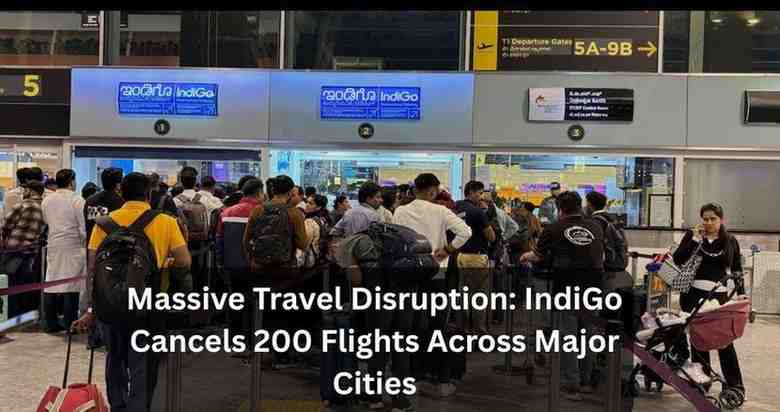
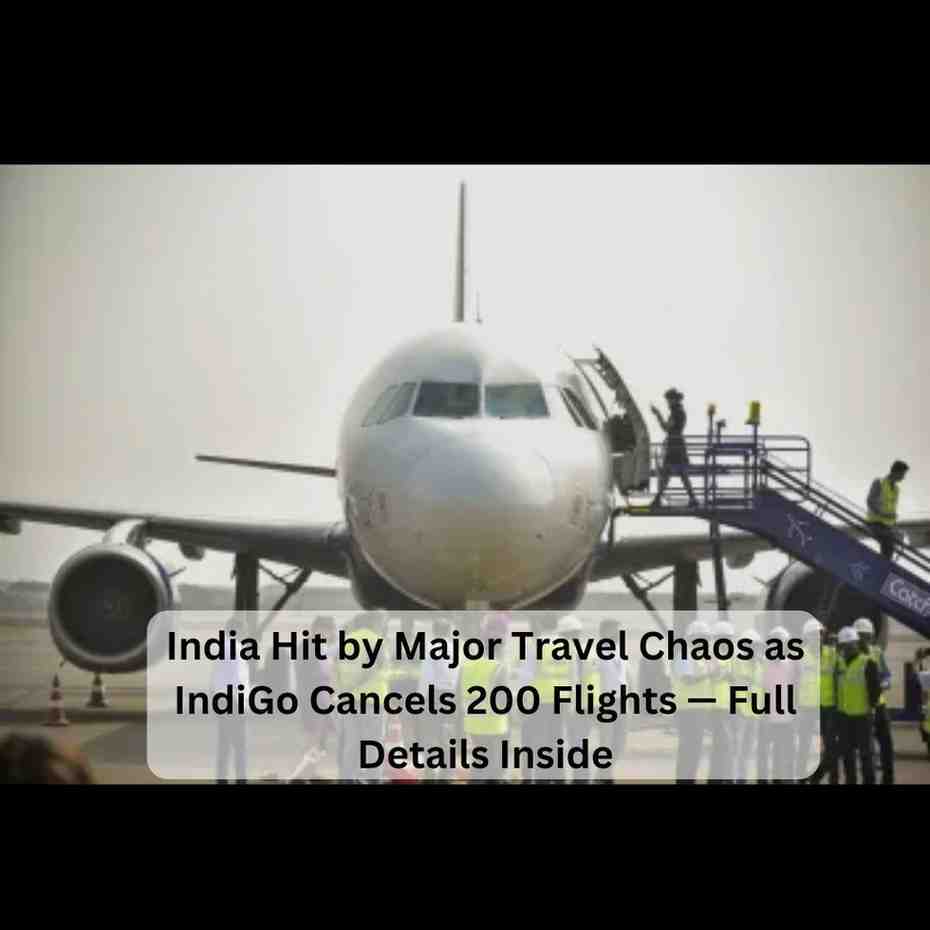
India woke up to one of its biggest aviation disruptions in recent memory as IndiGo — the country’s largest airline — abruptly cancelled close to 200 flights across major metro airports. The sudden wave of cancellations triggered confusion, long queues, and frustration among thousands of passengers who rely on IndiGo’s extensive domestic network every day.
From business travellers rushing for meetings to families heading for vacations, Wednesday’s chaos left a deep impact on India’s aviation ecosystem and raised questions about the preparedness of airlines amid rapidly evolving regulations.
What unfolded throughout the day provides a rare glimpse into the fragile balance behind airline operations — where one small shift can shake the entire system.
What Exactly Went Wrong?
By early morning, reports began emerging from Delhi, Mumbai, Bengaluru, Hyderabad, and other major hubs regarding flight delays and outright cancellations. As hours passed, it became clear something unprecedented was unfolding:
- Nearly 200 IndiGo flights cancelled
- Thousands left stranded at airports
- Helplines and customer care overloaded
- Passengers receiving last-minute cancellation messages
- Social media flooded with complaints and photos of overcrowded terminals
IndiGo later released a statement attributing the problem to “crew availability issues.” However, this was only the surface.
What lay underneath was a deeper, systemic challenge that had been building for weeks.
The Real Story Behind IndiGo’s Massive Disruption
Several interconnected factors came together to create the perfect storm. Here’s the full, simplified breakdown.
1. New Pilot Fatigue Rules (FDTL Norms) Shook the System Overnight
A major shift in India’s aviation landscape came recently through the DGCA’s updated Flight Duty Time Limitations (FDTL). These rules are designed to reduce pilot fatigue and enhance safety — a long-demanded reform.
The new FDTL regulations include:
- Longer mandatory rest periods between flights
- Reduced flying hours for pilots
- Tougher restrictions on overnight duties
- More weekly and monthly off-days
- Stricter limits on back-to-back duty schedules
These new requirements came into force only recently.
Why this hit IndiGo the hardest:
IndiGo operates the largest daily network in India — often more than 1,800 flights every day. This setup depends heavily on:
- Predictable crew availability
- Tight turnaround timings
- Back-to-back flight cycles
The moment rest hours increased:
- Many pilots suddenly became “unavailable”
- Roster planning went into chaos
- Aircraft rotations got disrupted
- Buffer crew strength proved insufficient
This led to a chain reaction that eventually grounded nearly 200 flights in a single day.
2. India’s Growing Pilot Shortage Became Impossible to Hide
India has been steadily expanding its aviation capacity. Yet, the supply of trained pilots hasn’t kept pace.
Why India faces a pilot shortage:
- Rapid domestic air traffic growth
- Increasing aircraft deliveries
- Long training cycles (up to 3 years)
- Indian pilots moving abroad for better salaries
- High fatigue, burnout, and resulting sick leaves
Before the new FDTL norms, airlines were barely managing with stretched resources. Once the rules tightened, the hidden gaps surfaced overnight.
3. IndiGo’s High-Frequency, Quick-Turnaround Model Backfired
IndiGo’s business model focuses on:
- Short-haul routes
- High-frequency metro connections
- Fast turnaround cycles
- Maximum aircraft utilisation
This structure delivers low fares and high punctuality — but only when operations run smoothly.
With crew availability uncertain, the entire system became unstable.
Even a small shortage can create a big domino effect.
In this case, the effect was nationwide.
4. Early-Morning Sick Leaves & Misaligned Rosters Added Fuel to the Fire
Aviation insiders reported unusually high early-morning “sick calls” from pilots, many citing exhaustion under the new rules.
In aviation, a flight cannot operate unless both:
- The Captain
- The First Officer
are available.
So when even a single member reported unfit for duty:
- Flights had to be cancelled
- Subsequent flights using that aircraft were affected
- Connecting passengers were stranded
With each delay, more cancellations followed — multiplying the chaos.
How Passengers Were Impacted: A Ground-Level View
Scenes from major airports painted a picture of complete disarray.
✔ Long queues at IndiGo help desks
Passengers waited for hours to find alternative flights or seek refunds.
✔ Many missed international connections
Travellers connecting from IndiGo flights to long-haul international departures faced the worst impact.
✔ Customer support lines went into overload
IndiGo helplines and airport counters struggled to cope with the sudden surge.
✔ Ticket prices on other airlines skyrocketed
With thousands scrambling for alternatives, last-minute fares shot up instantly.
✔ Social media outrage
Videos and photos showed:
- Stranded passengers
- Long serpentine queues
- Anger over last-minute SMS cancellations
- Families with children waiting for hours
IndiGo’s Official Explanation
IndiGo publicly apologised and attributed the disruption to:
- Crew availability issues
- Operational realignment under the new FDTL norms
The airline assured passengers that:
- Schedules are being rebuilt
- Pilots are being redistributed across routes
- Additional buffers are being created
- Operations will stabilise “soon”
Aviation experts believe it might take 2–4 days for complete normalisation.
What Happens Next? The Road Ahead for Airlines & Passengers
1. IndiGo may reduce flight frequency temporarily
Expect fewer flights on some metro routes until rosters stabilise.
2. Increased recruitment
The airline is likely to fast-track hiring of new pilots in the coming months.
3. Revised fatigue management
Airlines will need to redesign schedules to comply with the new safety-first norms.
4. Other airlines may face similar issues
Since the FDTL rules apply industry-wide, this disruption may not be exclusive to IndiGo.
🧳 What Passengers Should Do Right Now
1. Check flight status before leaving for the airport
Use the IndiGo app or website for real-time updates.
2. Add buffer time for important travel
For important events or international connections, allow extra margin.
3. Know your DGCA rights
Passengers are entitled to:
- Free rebooking
- Full refund
- Meals and hotel (depending on delay duration)
4. Prefer early-morning flights (for now)
These flights face fewer disruptions after rosters stabilise.
IndiGo’s mass cancellation of nearly 200 flights is a reminder that India’s booming aviation sector is under immense pressure.
The introduction of stricter crew rest rules is crucial for safety — but it also exposes how stretched airlines already are.
In the long term, the new norms will lead to:
- Better-rested pilots
- Safer flights
- Stronger aviation practices
But in the short term, passengers should be prepared for occasional turbulence as airlines transition.
India’s skies are getting safer — but the journey to a stable operational model will take time.