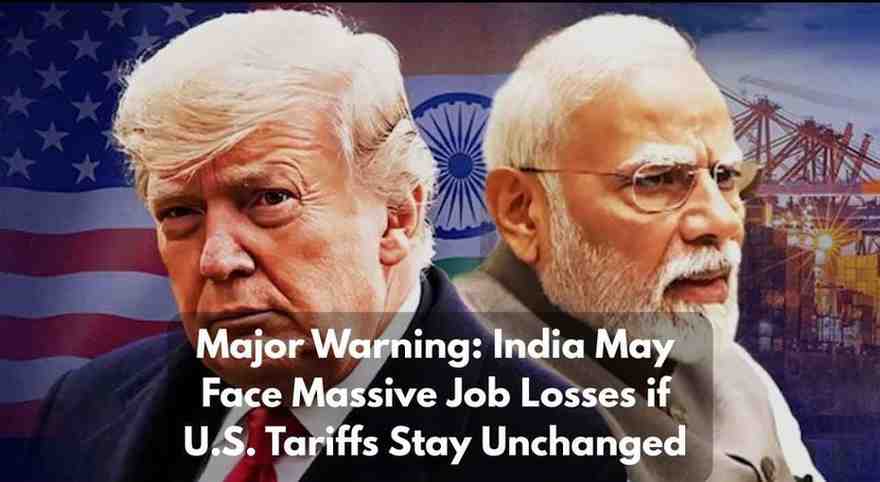
A new wave of global trade tension is building, and India may be standing directly in its path. As U.S. President Donald Trump signals tougher tariff measures on foreign imports, economists and trade specialists warn that India could face severe consequences—potentially losing as many as 20 million jobs within weeks if the proposed hikes are not softened.
The anxiety is growing across India’s export sector, from small factory owners to large industry bodies. With the United States being one of India’s biggest buyers, even a slight disruption can ripple across the economy. Now, with the possibility of higher import duties looming, that ripple could turn into a tidal wave.
Why Are These Tariffs Such a Big Deal?
The U.S. administration’s tariff plan is part of a larger effort to strengthen domestic manufacturing and reduce dependency on foreign supplies. While this may help American producers, the move is sending shockwaves through countries like India that rely heavily on export revenue.
If tariffs rise by even 5–10%, Indian goods entering the American market automatically become costlier. In global trade, where margins are tight and alternatives are plentiful, this slight shift can completely change buyer preferences.
Countries such as Mexico, Vietnam, Taiwan, and China could quickly replace India as preferred suppliers.
Why India Is Exposed: Major Exports at Risk
India ships billions worth of goods and services to the U.S. each year, including:
- IT and software outsourcing
- Textiles and clothing
- Pharmaceuticals (especially generics)
- Automobile components
- Engineering goods
- Electronics
- Gemstones, diamonds, and jewelry
- Chemicals and specialty materials
Tariff increases affect all of these sectors, which together employ millions of Indian workers.
How Tariff Hikes Could Trigger Massive Job Cuts
Experts describe the impact as a domino effect—a chain reaction that starts with higher costs and ends with widespread unemployment.
1. Export Orders Dry Up
With tariffs in place, Indian products become less attractive. Importers in the U.S. may:
- Place smaller orders
- Suspend long-term contracts
- Switch to cheaper suppliers
2. Production Slows Down
Factories dependent on U.S. demand begin reducing output to avoid stockpile losses.
3. Layoffs Become Unavoidable
This hits India’s job-heavy sectors the hardest:
- Textile workers
- IT project teams
- Pharma plant workers
- Auto-component makers
- Electronics assembly units
Companies may cut staff, shorten work hours, freeze hiring, or cancel contract roles.
4. Small & Medium Enterprises Face the Worst Blow
SMEs don’t have financial cushions. A single lost order can push them into debt or closure.
5. Indirect Job Losses Add to the Pain
The damage doesn’t end at factories. Many connected industries also suffer:
- Transport and logistics
- Packaging and printing
- Raw material suppliers
- Warehouse staff
- Port workers
The combined effect could multiply job losses dramatically.
Sectors That Face the Highest Threat
1. Textiles & Apparel
India’s second-largest employer after agriculture. States like Tamil Nadu, Gujarat, Rajasthan, and Maharashtra could see huge layoffs.
2. IT & Software Services
Tariff-linked outsourcing restrictions could cause project delays or cancellations for major tech hubs such as Bengaluru, Hyderabad, Pune, and Noida.
3. Pharmaceutical Manufacturing
Indian generic medicines might lose price advantage in the U.S., leading to slower exports.
4. Automotive Components
Higher duties reduce demand for Indian parts used by U.S. manufacturers.
5. Electronics & Devices
Assembly lines catering to U.S. brands could shrink or halt production temporarily.
Why Experts See This as a Serious Red Flag
The global economy is already under stress:
- lingering effects of the pandemic
- rising global interest rates
- disruptions from wars and supply chain shocks
- inflationary pressures
A tariff shock on top of existing instability could push vulnerable Indian industries into deep trouble.
Economists warn:
- Export growth may tumble
- Sectoral recovery plans for 2026 may be delayed
- Household incomes may drop
- SMEs could collapse without government aid
- Consumption demand in India may weaken
If tariffs remain high till Christmas, India may see a visible slowdown in early 2026.
How the Indian Government Is Reacting
Reports suggest Indian authorities are taking multiple steps:
- Monitoring U.S. policy developments
- Holding talks with American counterparts
- Identifying new global markets to diversify exports
- Working on support packages for vulnerable sectors
- Preparing incentives to keep Indian goods competitive
Leading industry associations such as FICCI, CII, and ASSOCHAM are urging the government to act quickly to protect export-driven jobs.
What Could Still Change the Outcome?
Everything hinges on one major factor:
Whether President Trump rolls back or relaxes the proposed tariff hikes.
If the U.S. grants exemptions or softens the policy for specific sectors, the damage could be reduced significantly.
But if tariffs stay firm or go higher, the next few months could be extremely challenging for India.
Final Word: A Crucial Countdown Begins
The coming weeks may determine the fate of nearly 2 crore Indian workers, especially those directly linked to export industries. Businesses, employees, policymakers, and global investors are all waiting anxiously for clarity from Washington.
If tariff relief arrives, India’s industries may stabilize.
If not, the country could face one of its toughest employment shocks in recent years.